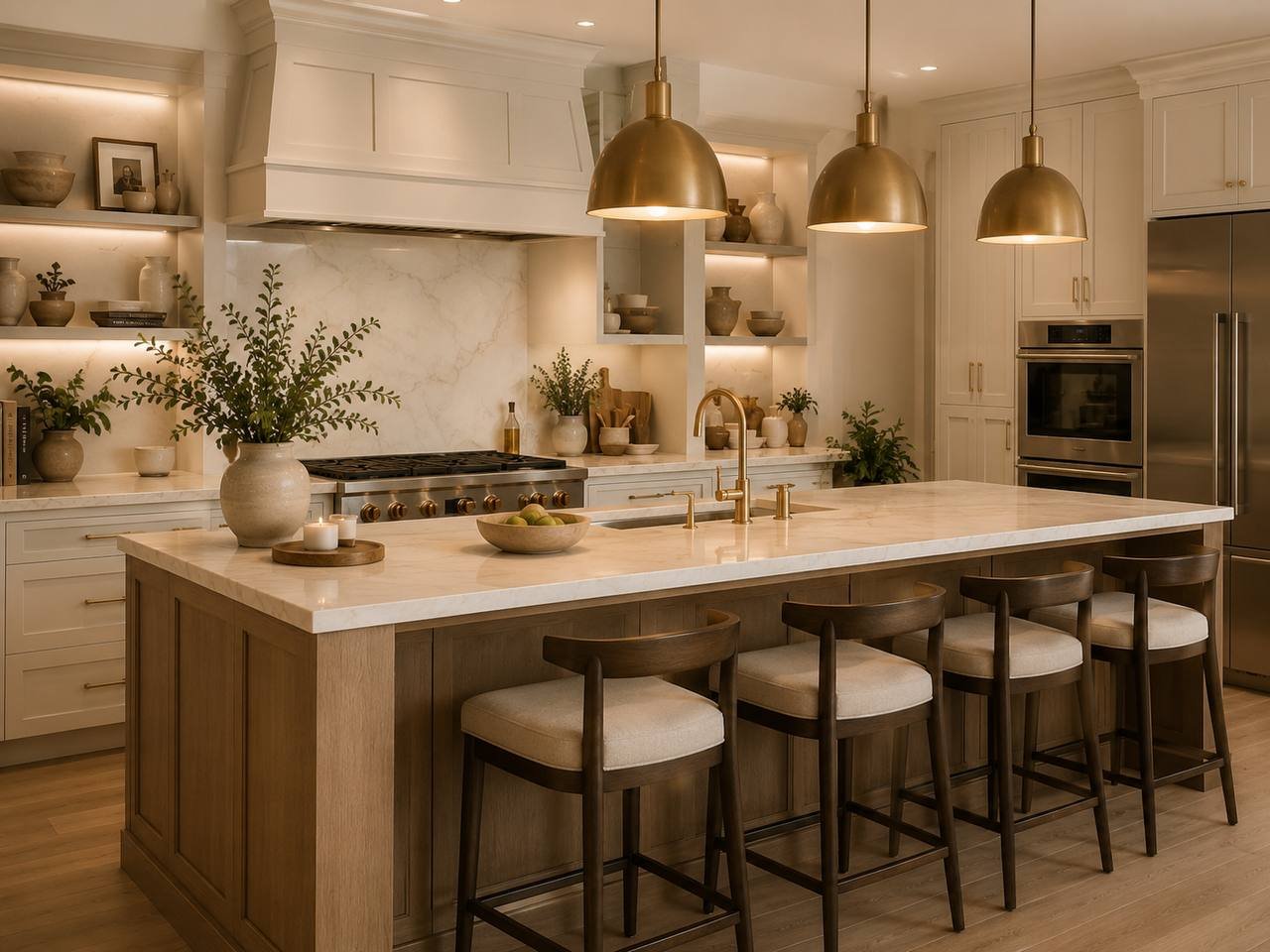
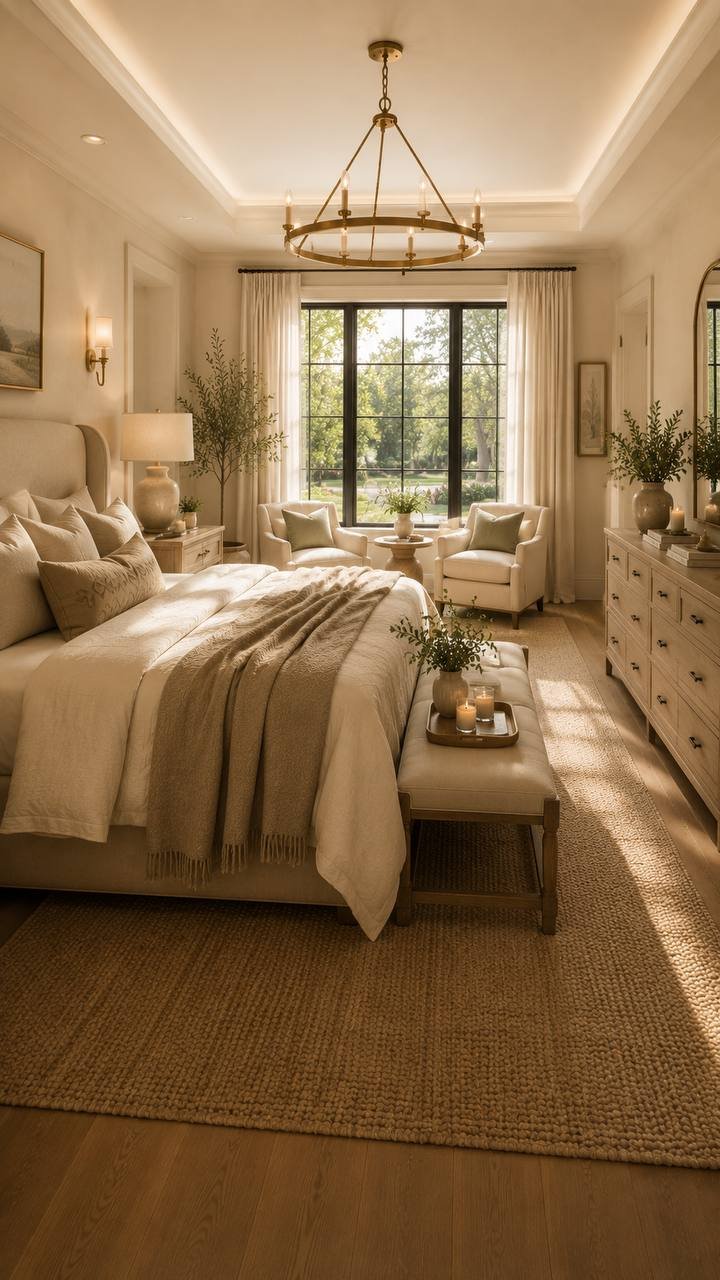
The Quiet Luxuryof Natural Materials
Wood, stone, linen, clay — the materials that never go out of style, because they were never in it.
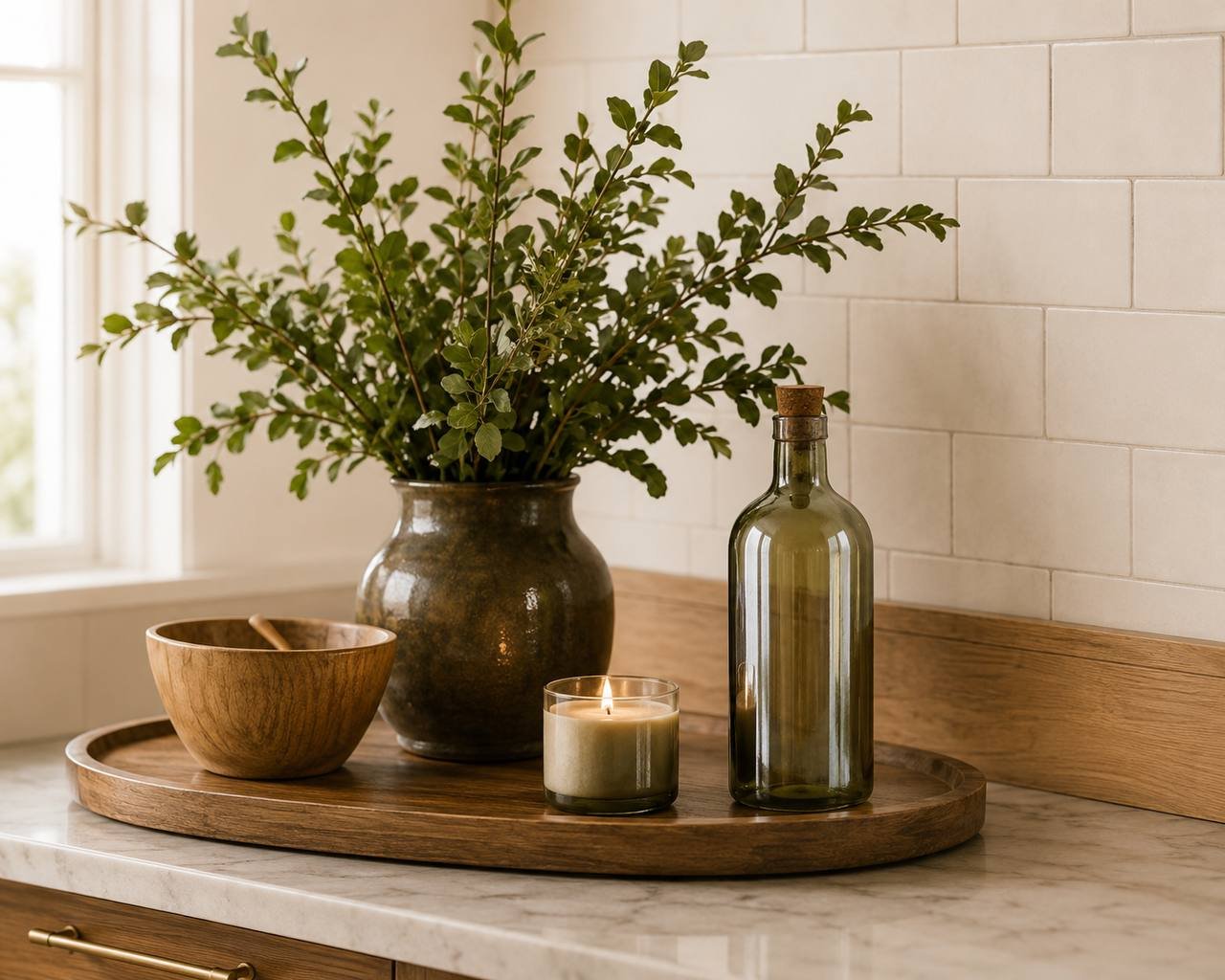
Walk into a room that feels instantly calm and you will almost always find the same quiet cast: wood that shows its grain, stone that shows its age, linen that wrinkles without apology. Nothing shouting, nothing pretending to be something else.
Natural materials are the opposite of trend. They connect a home to the world outside it, they feel better under the hand than anything synthetic, and — unlike most things we buy — they grow more beautiful with use. This is a guide to choosing them well, even on a modest budget.
Foundations
Why Natural Materials Feel Different
Our senses are old. They evolved reading wood, stone, fiber, and clay — and they still relax in their presence in a way no laminate can imitate.
- Natural surfaces have depth: grain, veining, and slubs that catch light differently every hour.
- They are honest — what you see is what the material is, and the eye can tell.
- They age into patina instead of wearing into shabbiness.
- A room needs fewer objects when its surfaces themselves are interesting.
Wood
The Warmest Material in the House
Wood is the fastest way to warm a room that feels cold or flat. It does not need to be expensive — it needs to be visible and real.
- Let grain show: matte or oiled finishes over thick glossy coats.
- Mix tones freely — nature does. One room can hold oak, walnut, and pine happily.
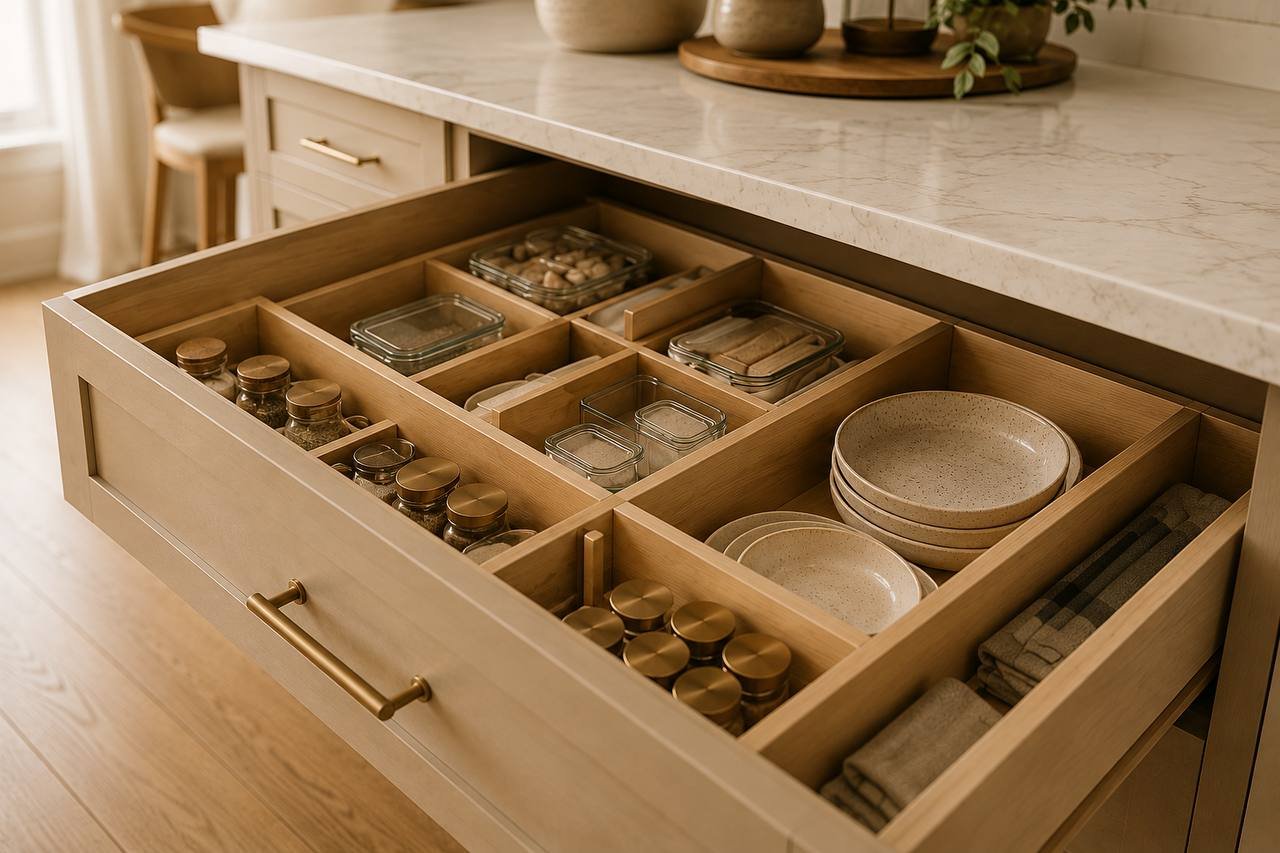
- Start small: a generous cutting board, a wooden tray, open shelves, a stool.
- Solid wood in the pieces you touch daily; veneer is fine where hands rarely go.
Stone & Plaster
Weight, Coolness, and Calm
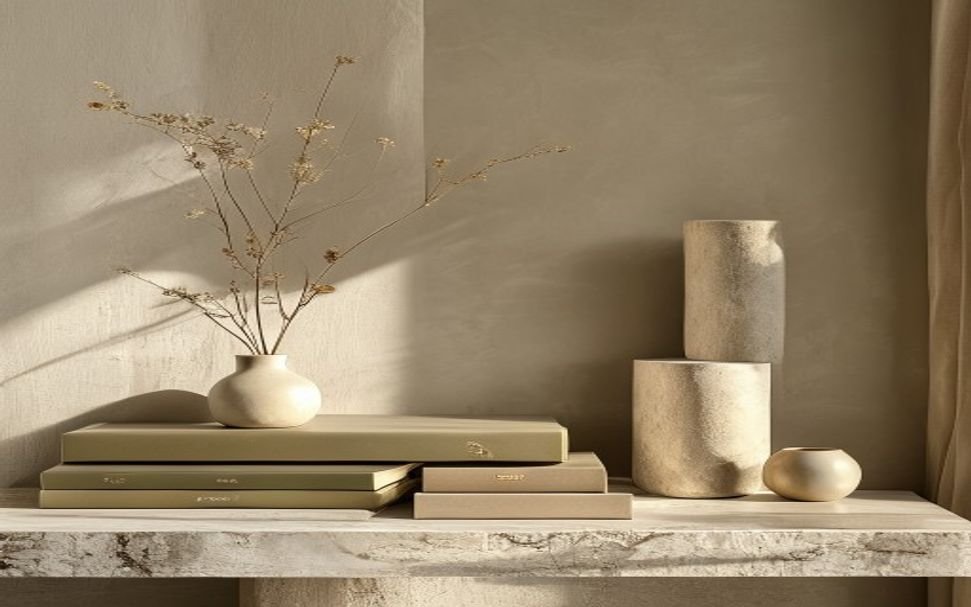
Stone brings what no other material can: a sense of permanence. And its quieter cousin — textured plaster or limewash — gives walls the soft depth that flat paint never achieves.
- One real stone moment per room is enough: a countertop, a lamp base, a bowl, a hearth.
- Honed and tumbled finishes feel older and calmer than high polish.
- Limewashed or clay-plastered walls change subtly with the light — alive all day.
- Marble stains and etches; that is not damage, that is biography. Choose it knowingly.
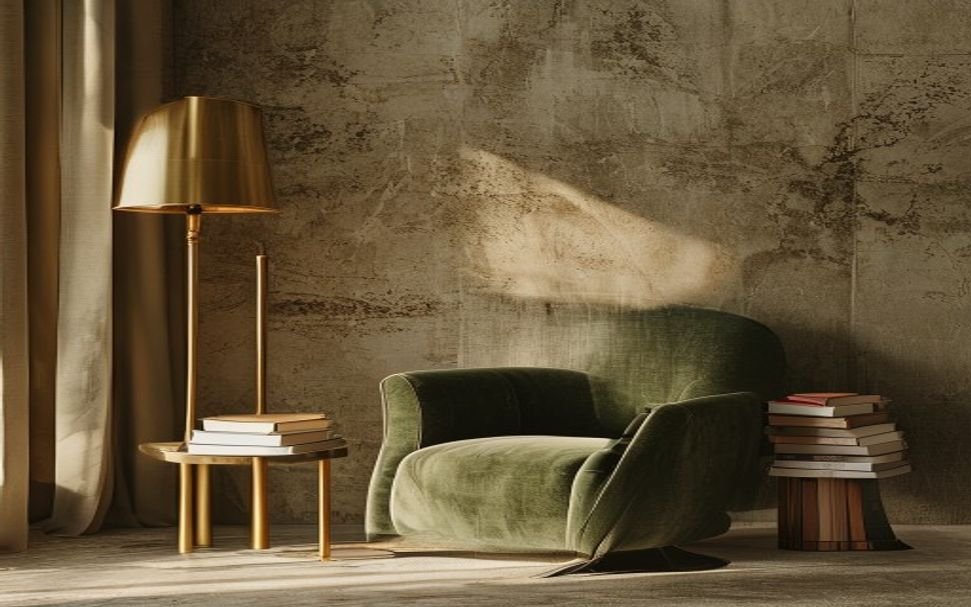
Texture is what light holds onto — flat surfaces let it slide away.
Fiber
Linen, Cotton, Wool — the Soft Architecture
Textiles are the material you actually live against. Natural fibers breathe, drape honestly, and forgive: a wrinkle in linen is charm, a wrinkle in polyester is a chore.
- Prioritize natural fiber where skin lives: bedding, sofa throws, cushions, towels.
- Choose undyed and muted tones — the fiber’s own color is usually the best one.
- Wool underfoot and on the sofa: it warms, quiets the room, and resists life.
- Fewer, better textiles beat baskets of decorative ones you rotate and wash.
The Natural Palette
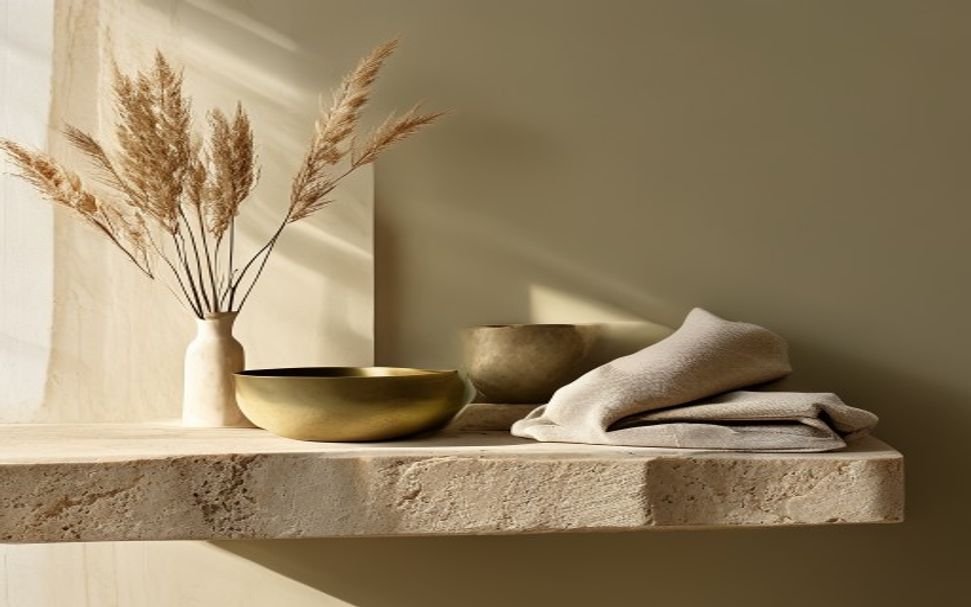
Four families — a room with all four never feels cold.
Time
Let Them Age — That Is the Point
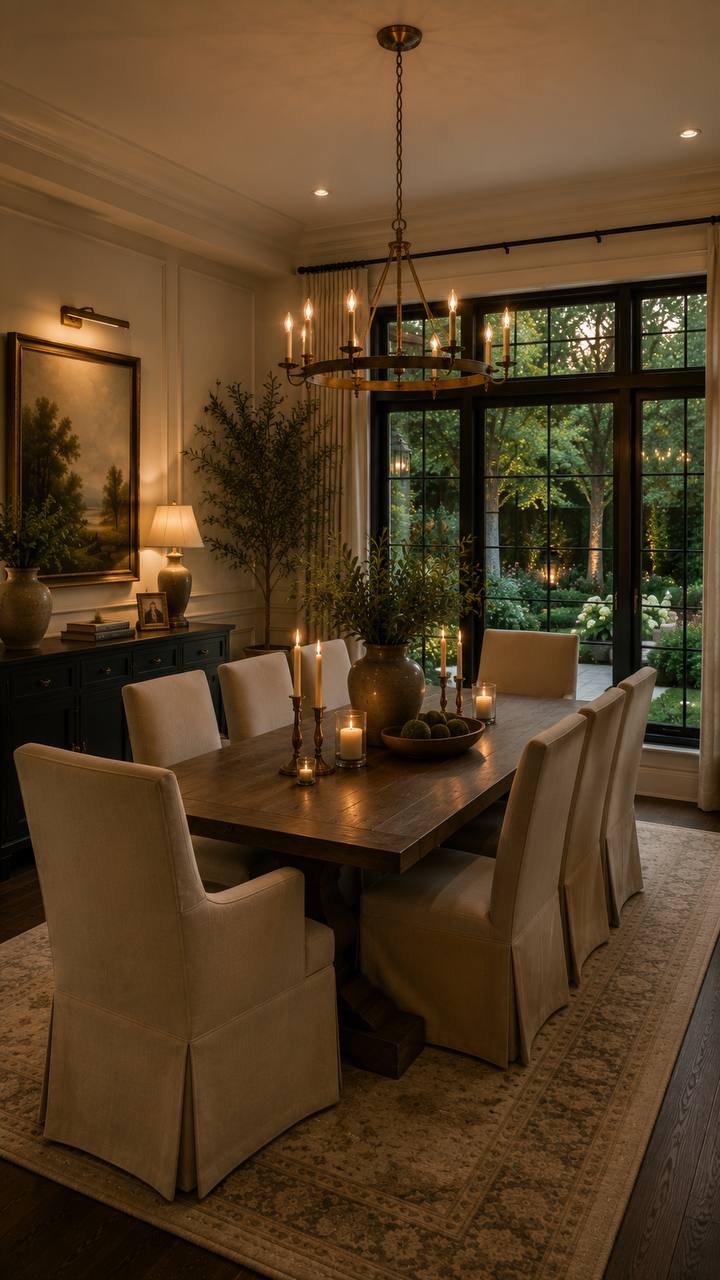
Synthetic materials are at their best the day they arrive and decline from there. Natural materials work the other way: the scratch softens, the wood deepens, the linen relaxes, the brass mellows.
- Care for them simply: oil for wood, gentle soap for stone, air and sun for fiber.
- Resist the urge to refinish every mark — patina is evidence of a life lived at home.
- Buy secondhand without fear: solid natural pieces improve owners, not just years.
- When something truly breaks, natural materials repair honestly — and often beautifully.
✦ Designer Tips
- Follow the 80/20 rule: mostly natural surfaces, synthetics only where performance truly wins.
- When two finishes cost the same, choose the one that looks better scratched.
- Bring materials home before committing — grain and veining photograph poorly.
- Repeat each material at least twice in a room so it reads as intention, not accident.
- Unfinished is a finish: raw oak, honed stone, and washed linen need no upgrade.
- One handmade ceramic piece per room adds the human note machines cannot fake.
Final Thoughts
Quiet luxury was never about price tags — it is about materials that do not need to impress because they simply belong. A pine board can carry it; a plastic imitation of marble cannot.
Begin with whatever you touch most — the bedding, the table, the board you cook on — and trade it for the honest version when the time comes. Piece by piece, the home stops looking decorated and starts feeling inevitable.